Modelling the 2020 Beirut port fire

Place

Beirut, Lebanon

Focus

Practice
Collaborator
Forensic Architecture

Status

Completed

Outputs

Report

What it is

An investigation comparing two possible fire-origin regions through simplified warehouse fire analysis.

Overview

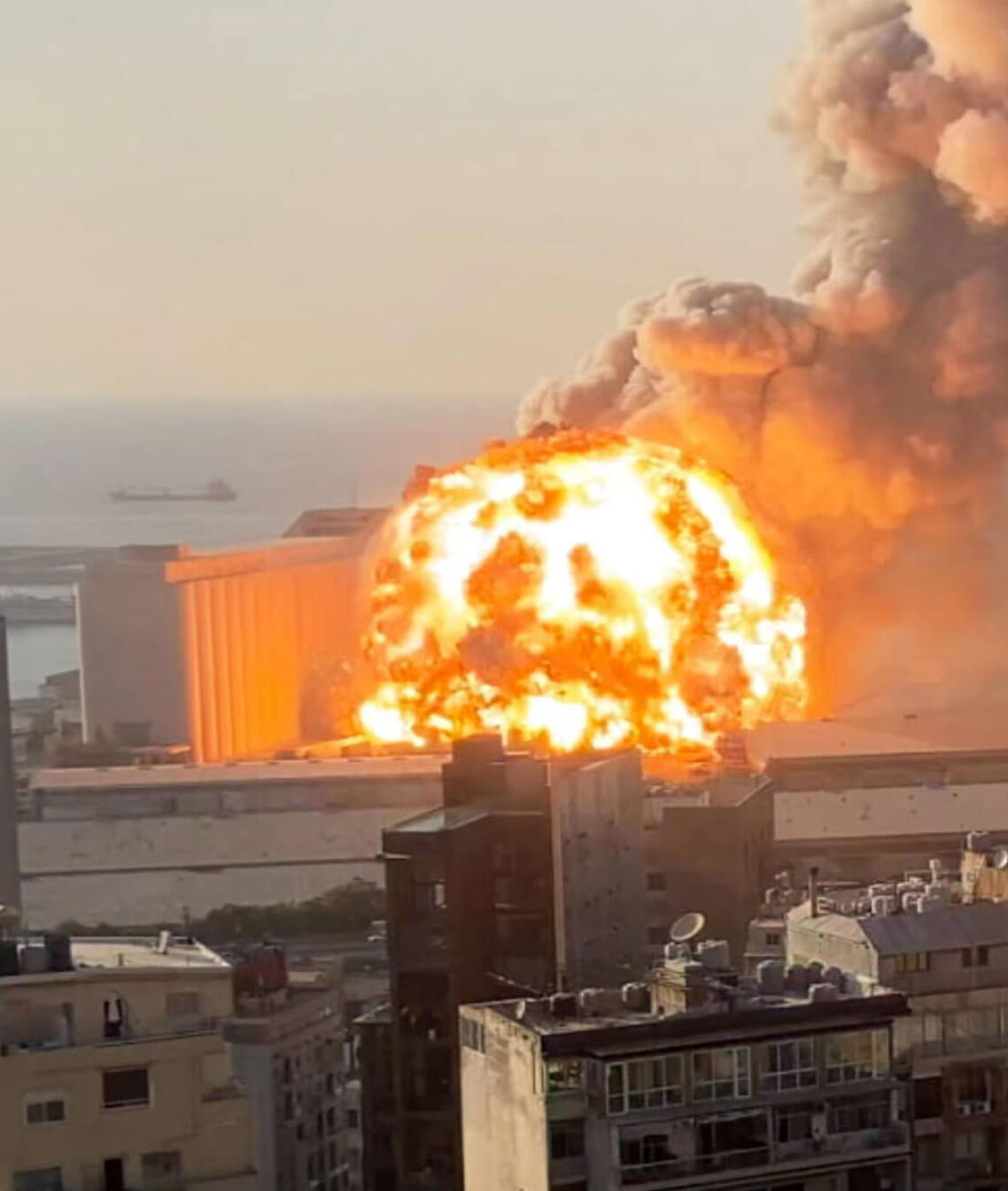
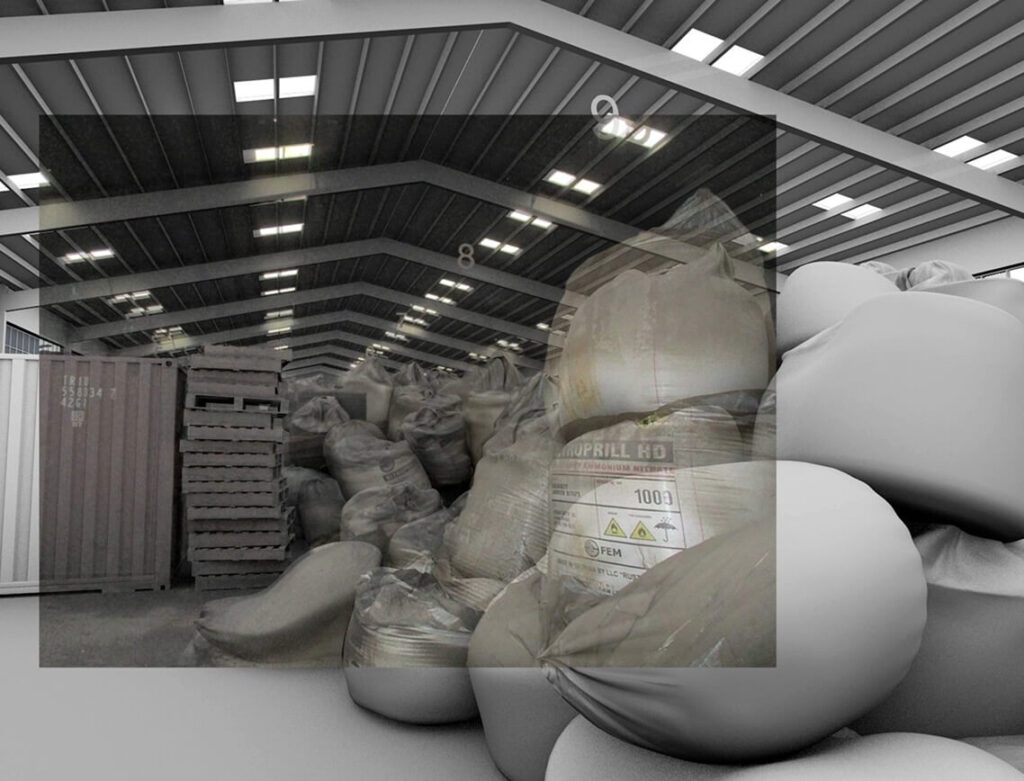
Following the 4 August 2020 explosion at the Port of Beirut, Forensic Architecture launched a public investigation to reconstruct the sequence of events that unfolded inside Warehouse 12 in the minutes before explosion. As part of their broader inquiry, they requested Kindling’s support to assess a specific technical question relating to the early-stage warehouse fire.

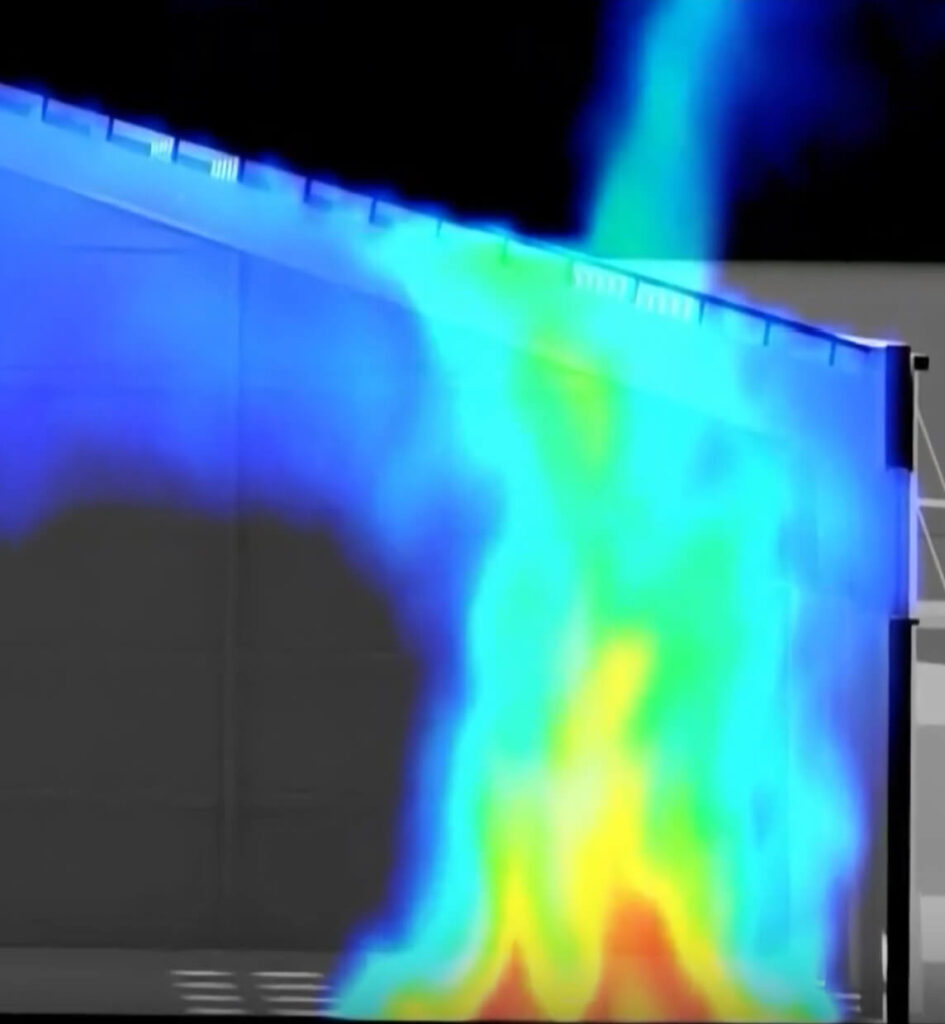
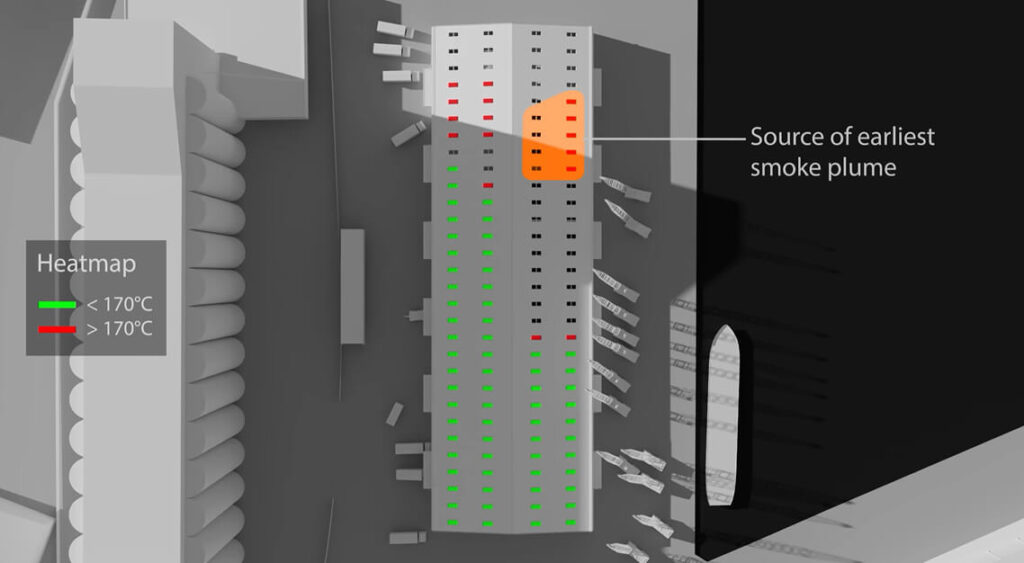
Working within the limits of publicly available information, Kindling provided a simplified fire dynamics analysis to help evaluate which of two locations identified by Forensic Architecture was more likely to have been the area where the fire first developed. Our contribution did not attempt to determine the definitive origin of the fire, nor to investigate alternate scenarios. Instead, we examined the plausibility of the two locations proposed by Forensic Architecture based on the physical cues visible in open-source video and the outputs of computational modelling.

Ágoston Németh

The Challenge

As described by Forensic Architecture:

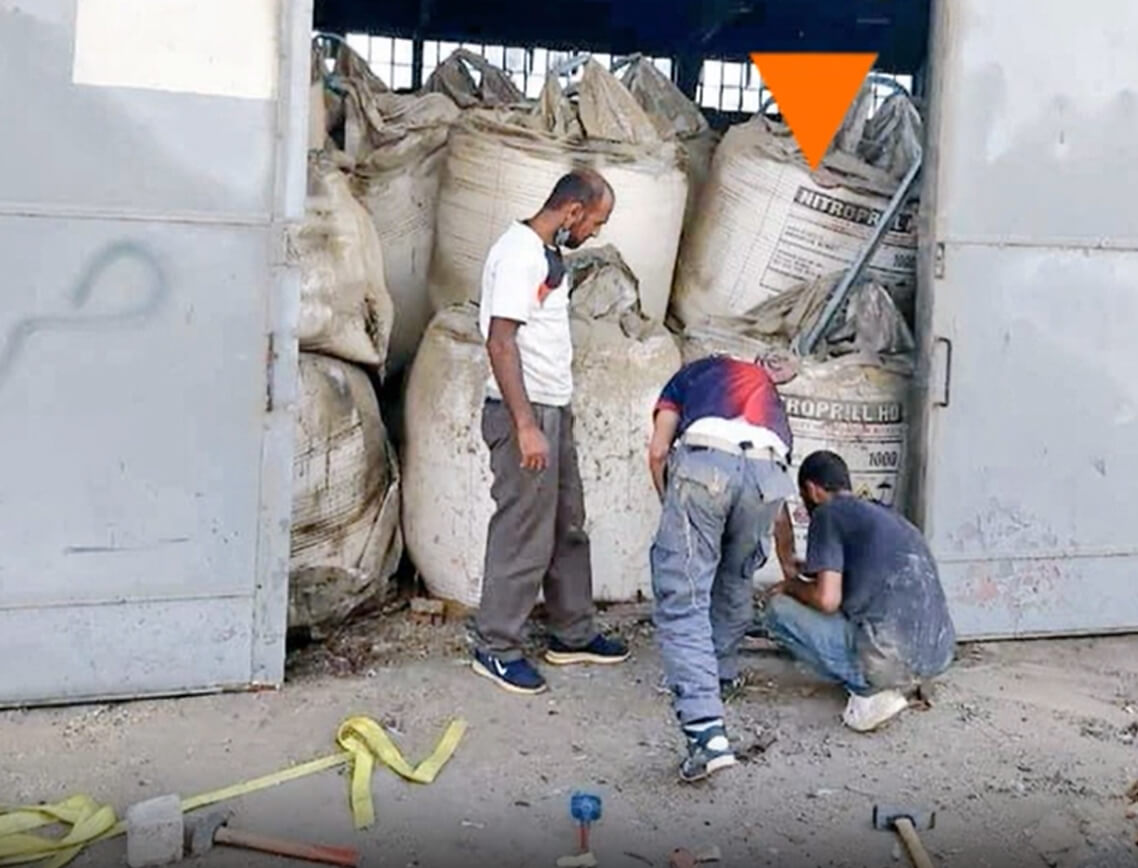
“The August 2020 explosion in the port of Beirut—understood to be one of the biggest non-nuclear explosions in recorded history—killed over 200 people and injured over 6,500, while devastating large parts of the city. Lebanese and international authorities quickly came to the same conclusion: The vast quantities of ammonium nitrate stored in warehouse 12 were detonated by a fire that was the consequence of shoddy welding work that had been carried out by Syrian workers on site earlier in the day…

Our investigation was undertaken as part of an ongoing effort to establish accountability in a political context where efforts to pursue due process have been continuously roadblocked, and migrant workers made into easy scapegoats to deflect blame from a powerful political establishment.”

Our Approach

Very little reliable on-the-ground evidence survived the explosion, and key information, including fuel load, material distribution inside the warehouse, and ignition sources, was limited. Under these constraints, the only available indicators of early fire behaviour were those captured indirectly on camera: how smoke moved, where hot gases escaped, and the sequence in which roof panels failed.

The task was to interpret these observations and to test, using fire and smoke modelling, whether either of the two proposed regions aligned more closely with observed physical behaviour.

This analysis required balancing scientific rigour with a clear understanding of the limits of the available data.

What We Found

Our analysis indicated that the fire behaviour observed was more consistent with a fire developing in the location provided by Forensic Architecture where the welders were not working.

These results do not determine the precise origin of the fire, nor rule out the possibility of other regions being involved. But given the constraints of available information, between the two locations provided for comparison, they indicate the more likely location the fire originated.

Forensic Architecture

Why It Matters

This work demonstrates how fire engineering can support investigative efforts even when traditional evidence is sparse or inaccessible. By grounding analysis in physical principles—rather than speculation—it strengthens the factual foundation upon which accountability processes depend.

For Kindling, the project reinforced the value of applying our technical expertise to public-interest investigations, particularly where fire behaviour intersects with governance failures, systemic risks, and catastrophic consequences.

Collaborator

We are grateful for our collaboration with Forensic Architecture. See their website for the full investigation report.

Forensic Architecture

Newsletter sign up

Get the latest updates via email