Fire School for Residents
Place
Focus
Status
Outputs
What it is
Overview
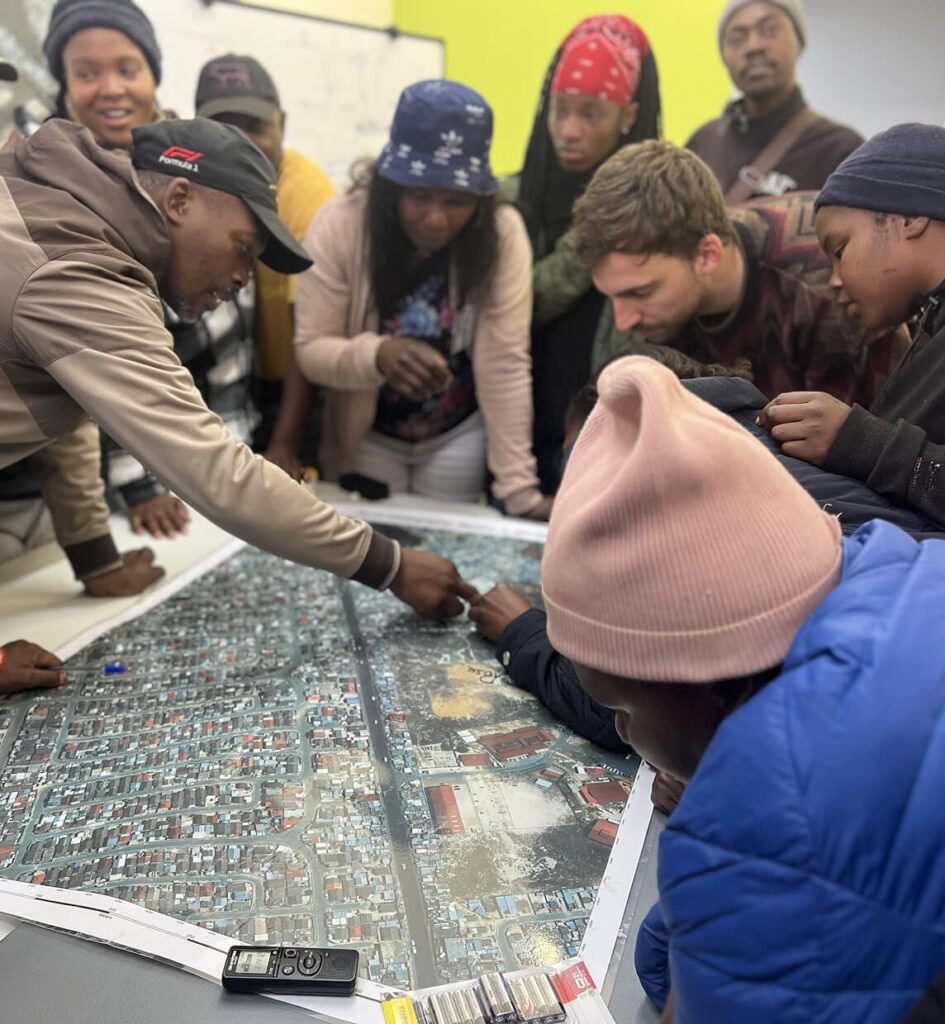
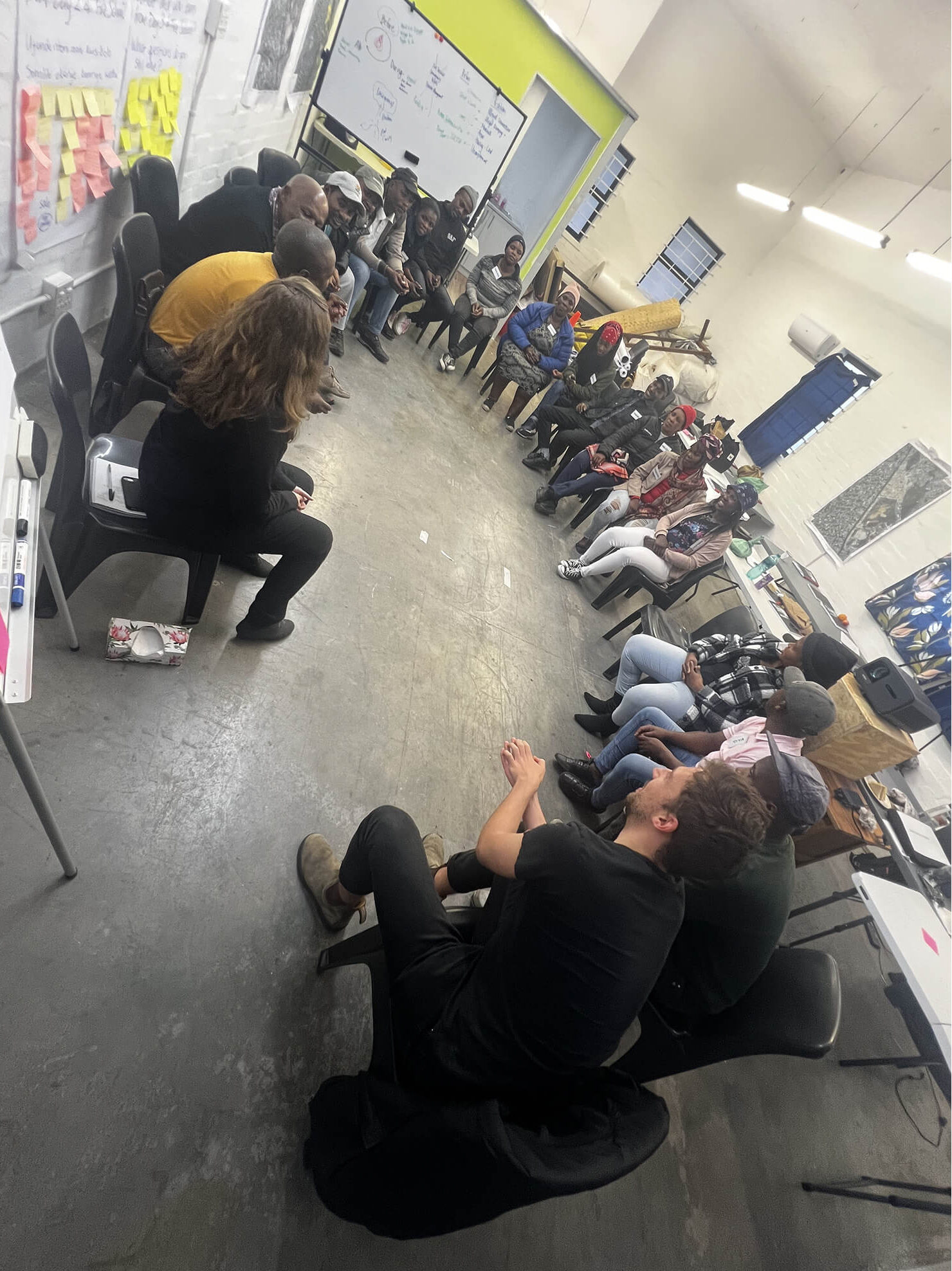
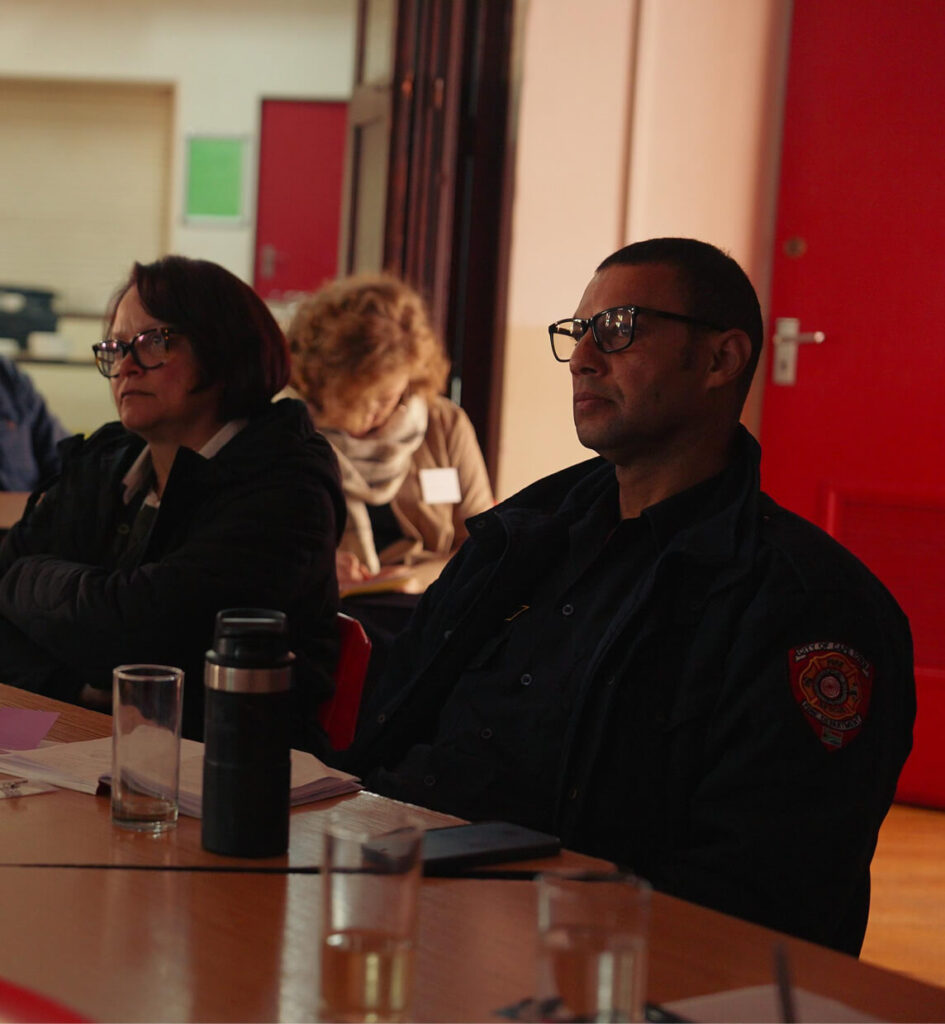
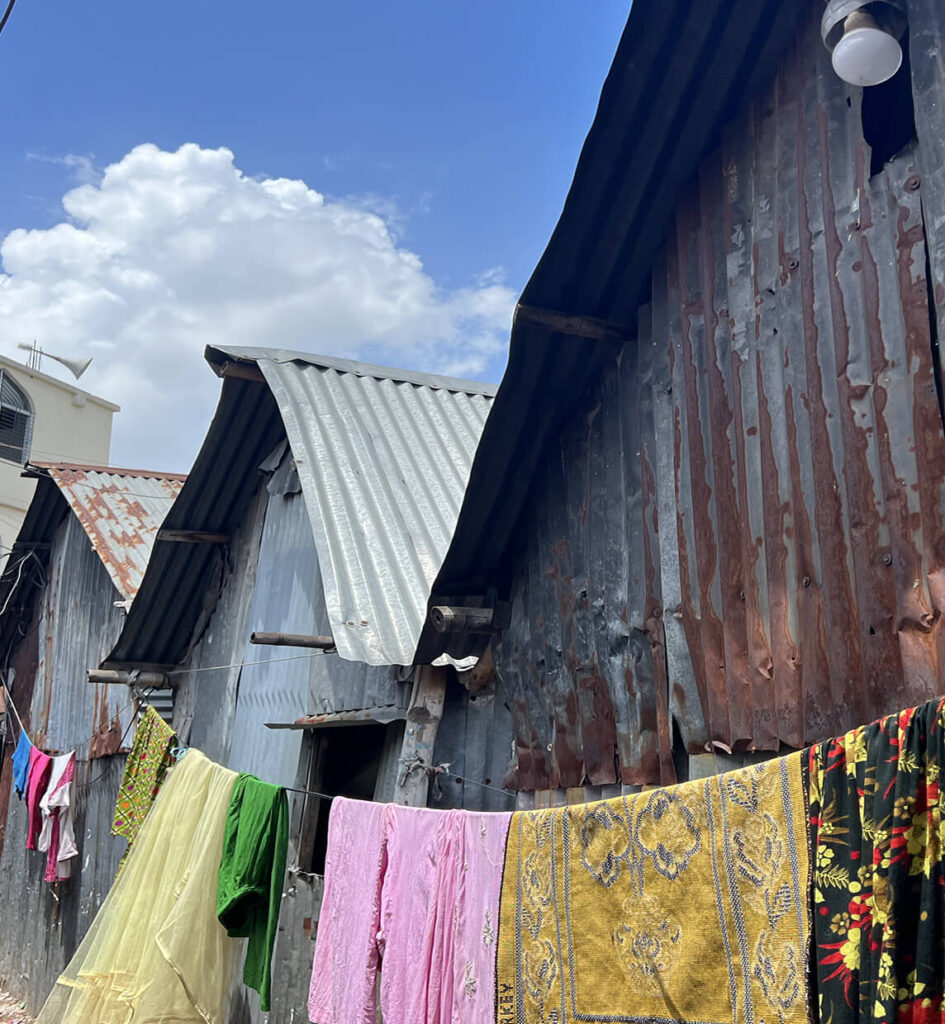
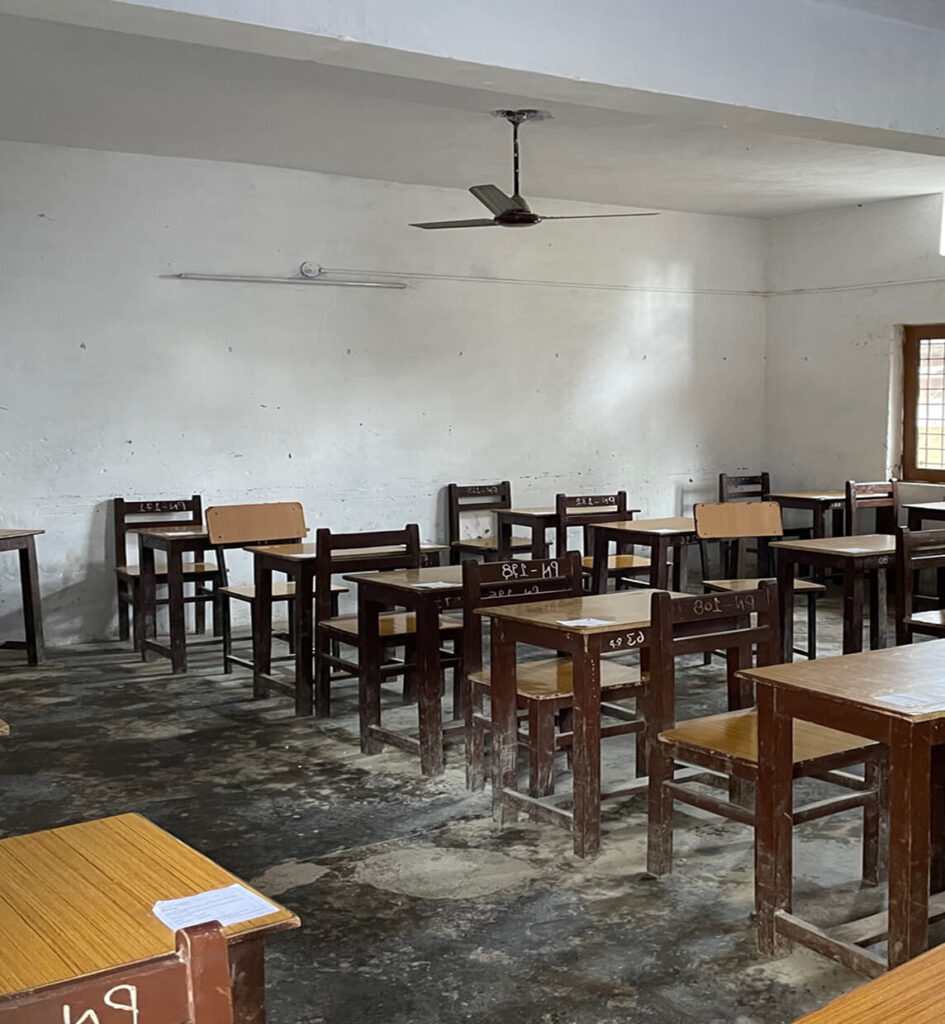
Fire School is a learning space where residents can explore the forces that shape fire risk in their community, ranging from how fires behave to the everyday, social, and systemic conditions that influence safety. In June 2025, residents from BM Section A, Khayelitsha took part in a five-day, classroom-based programme designed to make these knoweldge accessible through clear teaching, hands-on activities, and open discussion.
What unfolded was a deeply engaged exchange of knowledge. Participants drew on their own experience of real fires, asked demanding questions, and pushed the sessions into deeper and more complex territory. Their observations challenged assumptions, clarified concepts, and opened new lines of inquiry. Fire School became a shared learning environment where scientific understanding, lived expertise, and civic insight came together—and where residents shaped the direction and depth of the learning as it unfolded.
The Challenge
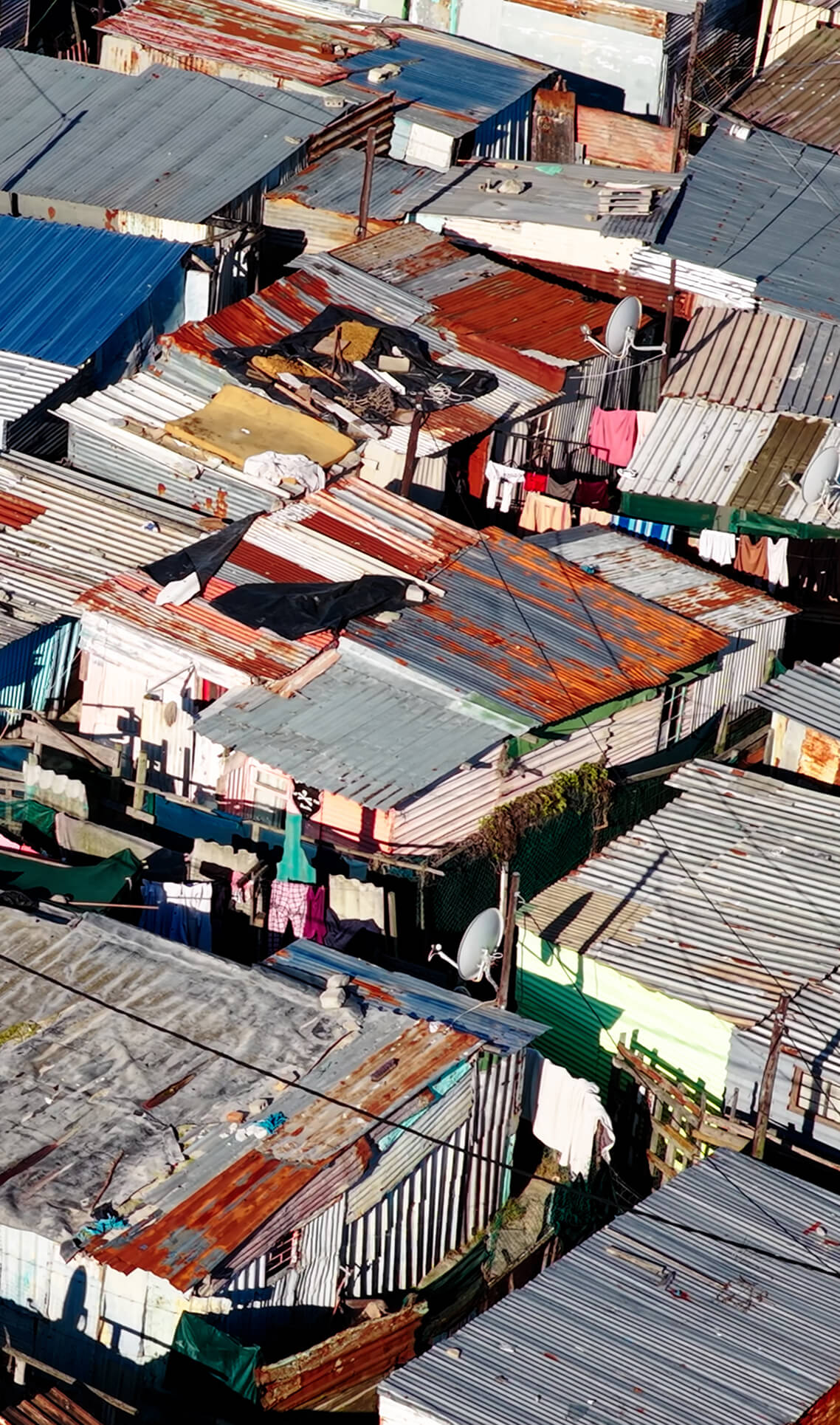
Communities living with high fire risk often receive information, not education. Typical fire safety efforts rely on pamphlets, campaigns, or warnings, assuming that simple messages can shift behaviour. These approaches rarely reflect the realities of daily life in dense settlements, nor do they acknowledge that residents already hold sophisticated knowledge shaped by experience, observation, and survival.
At the same time, fire science and engineering remain largely inaccessible—locked behind academic language, professional training, or assumptions about who needs to know what. This creates a structural divide between those who study fire and those most affected by it. Residents are left without access to the tools that could help them understand why fires behave as they do, what shapes their options for safety, or how systemic conditions influence risk.
Fire School was designed to address this learning gap. It recognised that residents do not need more messages; they need meaningful access to the knowledge that shapes their world. They need a space to ask complex questions, challenge expert assumptions, and build understanding in ways that honour their experience. Without this, fire safety remains top-down, incomplete, and disconnected from the realities of those navigating risk every day.
Our Approach
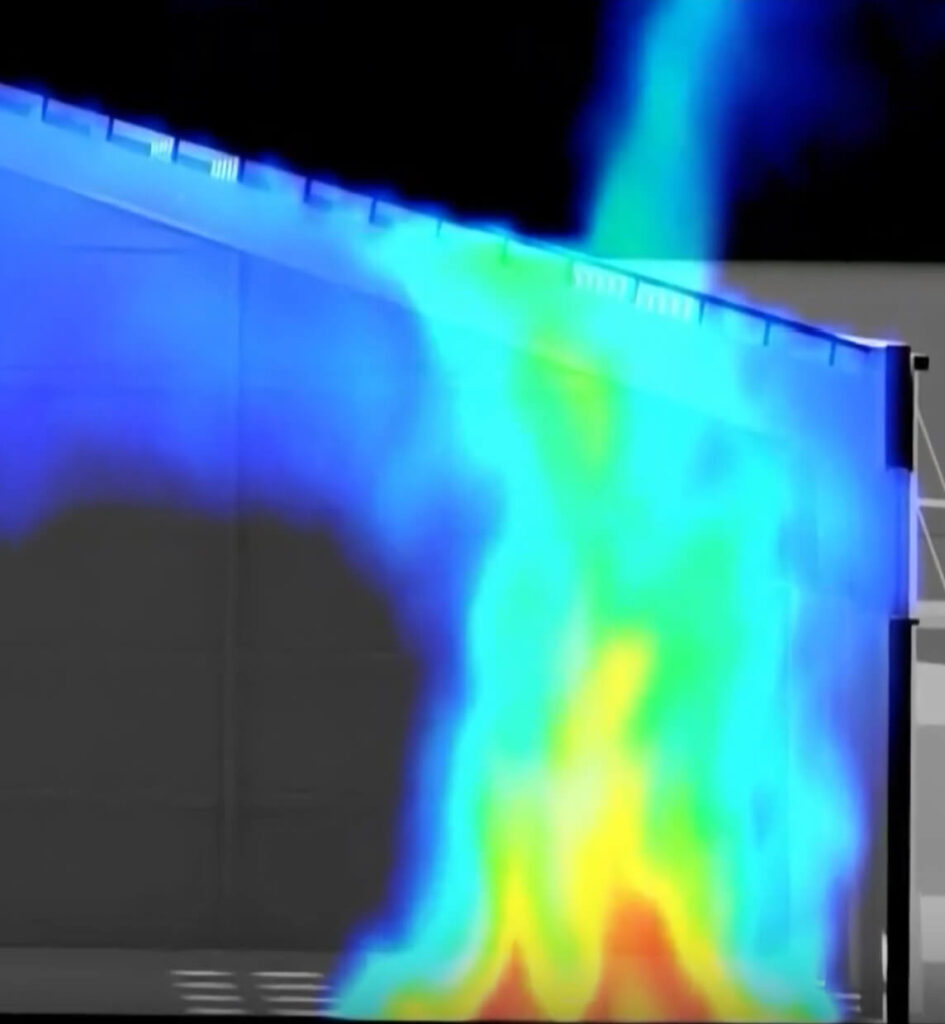
Fire School treats learning as a collaborative process where academic knowledge, lived experience, and structured teaching inform each other. Each session combines teaching with facilitation to ensure that concepts are both clear and open to interrogation. Demonstrations and activities make fire dynamics tangible, while guided discussions help connect theory to everyday life in BM Section A.
This approach is grounded in the belief that residents are not passive recipients of knowledge—they are co-interpreters and co-creators. As participants shared observations from real fires, fire engineers adapted explanations, reconsidered assumptions, and followed new lines of inquiry sparked by local experience. This turned the classroom into a mutual learning space where understanding deepened for everyone in the room.
The civic component of the curriculum helped participants navigate questions of responsibility, support, and accountability, drawing inspiration from materials shared by the Development Action Group. Throughout the week, the roles of teacher and learner were fluid: while Kindling structured the curriculum and held the pedagogical space, residents frequently stepped into teaching roles, offering clarity, insight, and real-world explanation that grounded the science.
The result was a learning environment where fire science became more accessible, and community knowledge became more visible, respected, and generative.

Key Insights
Learning becomes powerful when people are given access to knowledge traditionally kept out of reach. When residents encounter the science behind ignition, spread, materials, and heat, it transforms familiar experiences into clearer patterns and more confident decision-making.
Resident knowledge is not supplementary—it is essential. Their detailed observations of how fires start and move in dense environments sharpen and challenge technical explanations, revealing gaps that formal analysis alone cannot capture. When these two forms of knowledge meet, understanding deepens in ways neither could achieve alone.
Communities learn best when teaching flows in multiple directions. In the Fire School, residents moved naturally between learning, questioning, and teaching, demonstrating that meaningful education is built through dialogue, shared curiosity, and the blending of expertise.
Why It Matters
Fire School has opened a new pathway for reducing fire risk: one that is centred on learning, not messaging. It shows that when residents have the tools to understand fire science, they become partners in safety—not simply targets of interventions. It also revealed a profound appetite for learning beyond the initial cohort. Graduates asked for the curriculum to be made available to others, and a subsequent workshop with residents who did not attend confirmed a widespread demand for deeper fire knowledge.
This collective call for learning has shaped the next phase of Kindling’s work. Together with Fire School graduates, Kindling is co-creating a suite of educational films that capture key concepts, lived expertise, and practical strategies in ways that reflect community realities. These films will be used by residents to teach others, expanding learning beyond the classroom and allowing knowledge to circulate through homes, networks, and neighbourhood spaces. A new community-led learning programme based on these films is envisioned in 2026.
Over time, we aim to grow Fire School will grow to reach additional communities and, with support, evolve into a parallel programme for practitioners. For now, its strength lies in what it has already proven: that rigorous, equitable, curiosity-driven learning can transform how fire safety is understood, taught, and led.
Sponsor
This program would not be possible without the generous support of our sponsor, the Fire Safety Research Institute.
Collaborator
The civic-engagement components of the curriculum were informed by materials shared by the Development Action Group (DAG) through their ACTC training resources.