

Community-based fire risk assessment pilot
Place
Focus
Status
Outputs
What it is
Overview
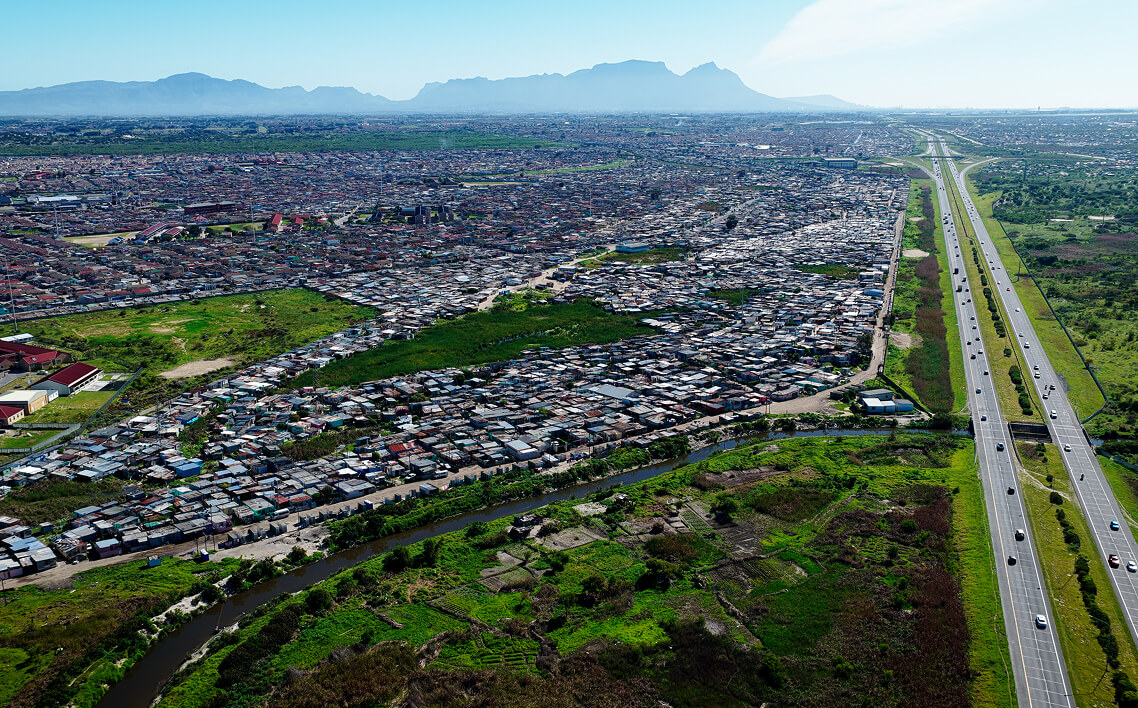
In Khayelitsha, Cape Town, residents of BM Section A informal settlement partnered with Kindling to pioneer a new, community-led approach to fire safety rooted in trust, participation, and shared accountability. This fire risk reduction pilot blends community knowledge, fire engineering, and social science to reveal how everyday conditions, and the systems that shape them create fire risk.
Kindling and residents build relationships, share skills, and work side by side to map hazards, identify vulnerabilities, analyze patterns, and co-design solutions rooted in lived experience. The fire risk assessment phase alone spanned six weeks and more than 150 hours of workshops and fieldwork, but the broader process has been one of sustained collaboration and mutual learning for well over a year.
This deep, locally anchored work has laid the foundation for a model that can be adapted and scaled elsewhere—one that demonstrates how lasting change begins with communities leading the process themselves.
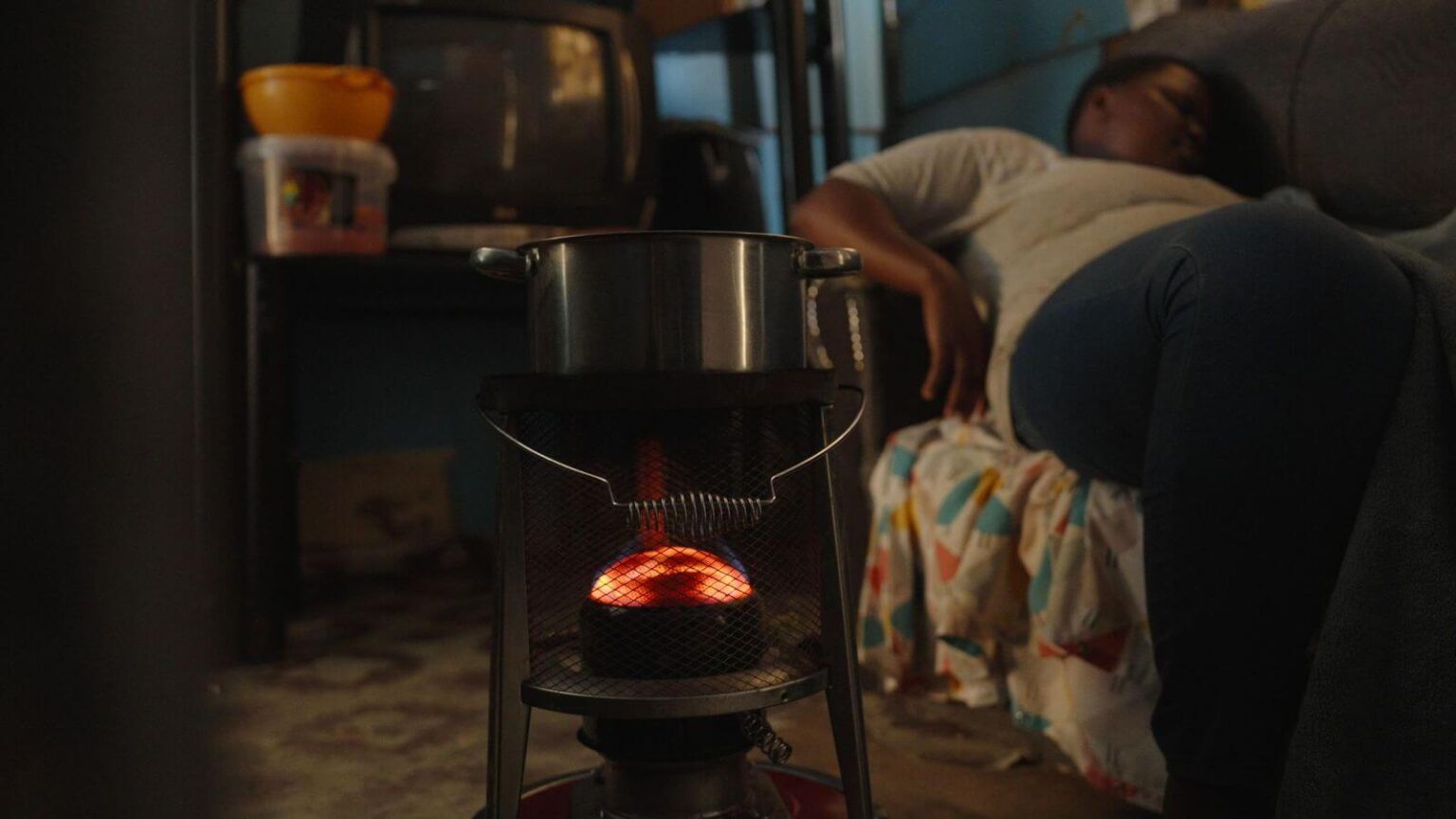
“Fire issues are critical to us, and we appreciate the exchange of information because, as a community, we have learned a lot from Kindling.”
- Resident
The challenge
In informal settlements across the world, fires are a daily risk. A single spark can displace thousands of people, destroy homes, and erase hard-earned development progress. These are not random accidents, they are symptoms of inequality, unsafe infrastructure, and systemic neglect.
In South Africa, informal settlement fires occur almost every day. Most fire safety initiatives rely on technical fixes (e.g., smoke alarms, special paints, fire extinguishers) introduced from outside and disconnected from residents’ lived realities. These efforts, though well-intentioned, rarely last because they overlook what communities already know and do to manage risk.
These approaches fail to recognize that residents face constant difficult choices with limited options, like how to source electricity, or how to keep their children safe and secure when home alone. These daily trade-offs shape fire risk far more than any single piece of technology.

Our Approach
The project focuses on understanding fire risk as residents experience it. Instead of starting with technical solutions, we begin with lived reality: how the settlement is laid out, what energy sources people rely on, how alerts travel, and what happens in the first few minutes of a fire. The pilot reimagines fire safety as a collaborative process between residents, researchers, and practitioners.
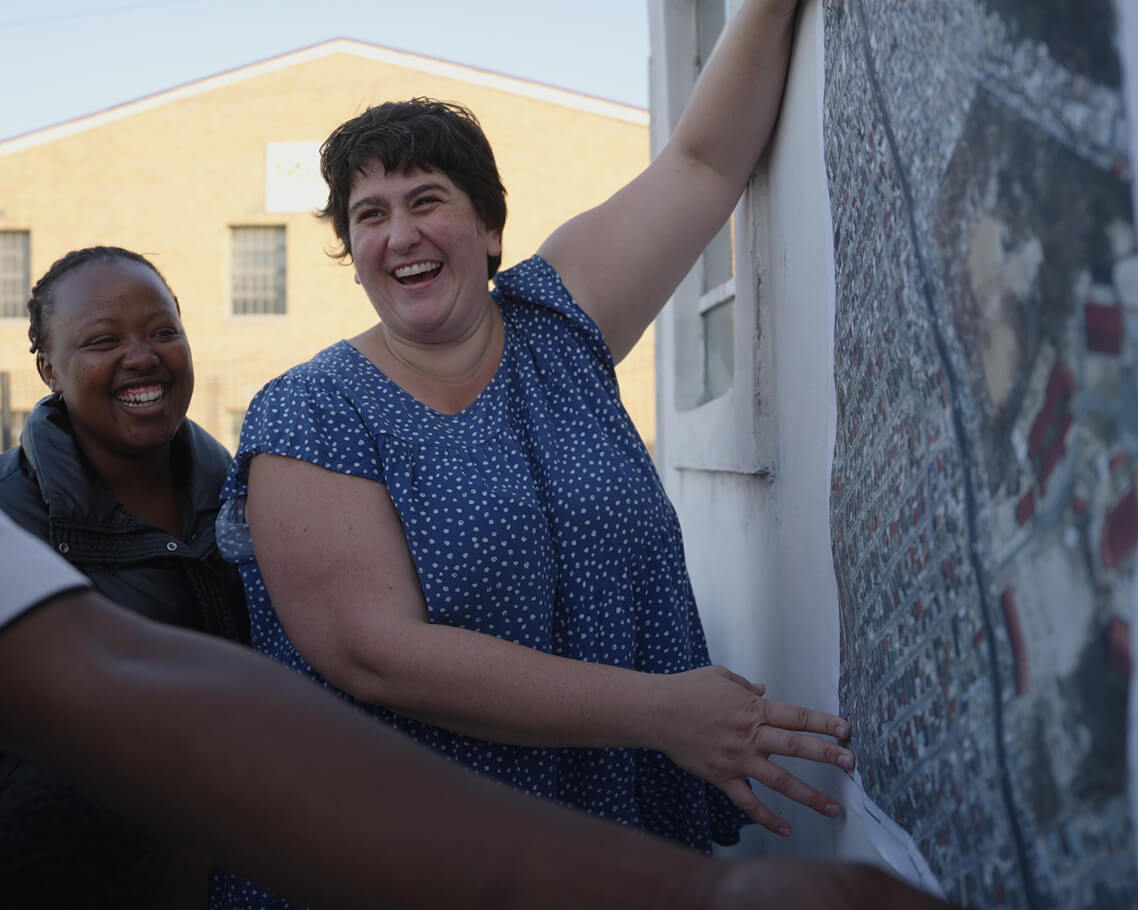
Working with Development Action Group (DAG), we established a local advisory committee and recruited six community-based researchers (CBRs) from Section A. These CBRs led the engagement process in isiXhosa and English, mapping the settlement, holding workshops, and working with youth, children, older adults, and people with disabilities.
The work unfolds through three connected phases: Assessment, Planning, and Implementation, each grounded in relationships and mutual learning. Together with residents, we focus on actions that are achievable now, while identifying longer-term changes that require support from the City and other partners. Civic engagement and advocacy strengthen these efforts, helping navigate systems and power structures that were never designed with the safety of informal settlements in mind.
Guiding questions
The pilot was designed around a set of questions that anchored dialogue between residents, engineers, facilitators, and officials.
These questions shaped every step of engagement, from community mapping to qualitative analysis.
- How do residents experience and define fire risk in their daily lives?
- What strengths and resources already exist in the community, and what support is needed to act on them?
- How can local insights shape practical fire safety solutions?
Phase 1:
Fire Risk Assessment
Over six weeks, the team facilitated 155 hours of community engagement involving more than 300 residents. Workshops were conducted in isiXhosa and English, supported by six trained Community-Based Researchers (CBRs) and an advisory committee of local leaders.
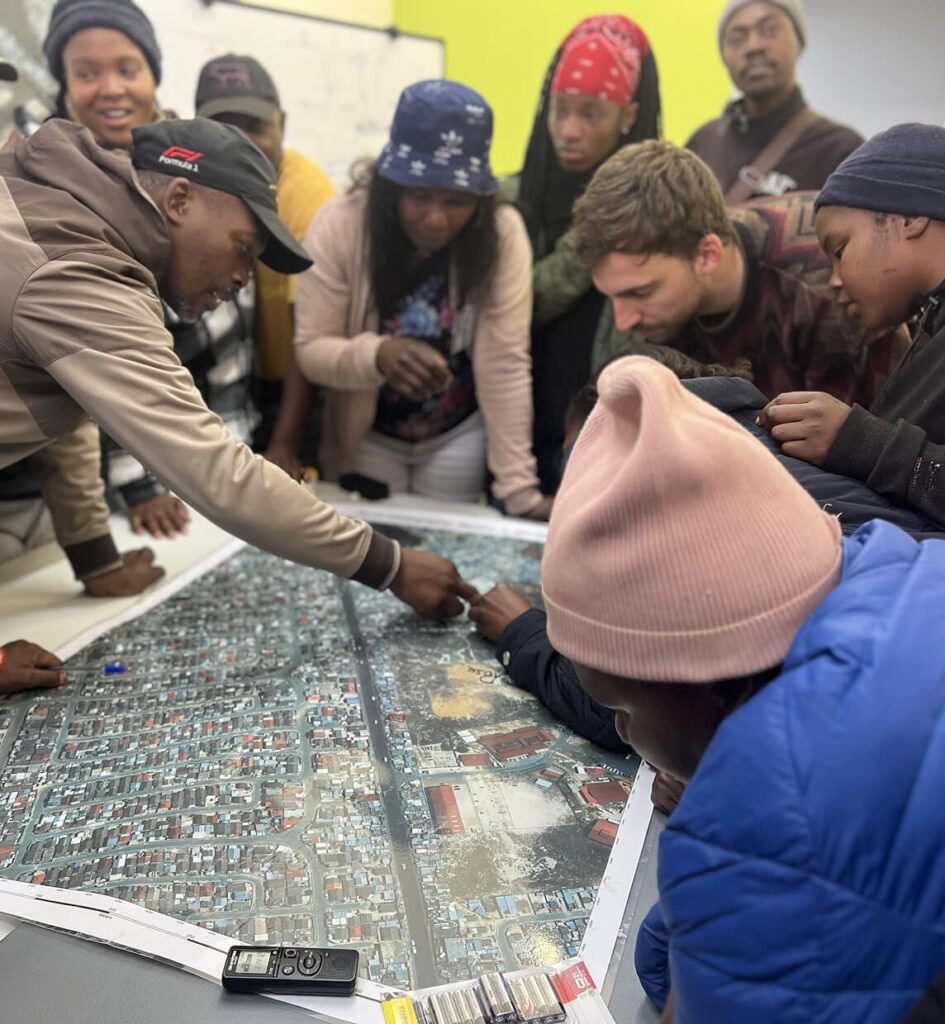
Residents participated in mapping exercises, fire memory discussions, and spatial analysis of pathways and hazards. The process emphasized listening, dialogue, and reflection.
Turning Insights into Shared Understanding
Community-based researchers and Kindling jointly analyzed transcripts from hundreds of hours of recorded discussions, using thematic analysis to identify recurring concerns and translate them into clear problem statements. This step transformed community’s stories, experiences, and observations into actionable understanding of fire risk.
Unlike conventional research, analysis was co-led by local residents. Their interpretation of the data ensured that findings reflected lived realities, not outsider assumptions.
The collaboratively developed problem statements form the bridge between fire risk assessment and fire risk reduction planning—defining what needs to change before deciding how to change it. Residents identified and categorized fire risk into six interconnected dimensions.
- Fire Ignition – smoking; electricity; loadshedding and disruption of electrical supply; intentional fire; illegal dumping; children playing; cultural practices; cooking while intoxicated; unsafe cooking, heating, and lighting practices and appliances;
- Fire Spread – density / proximity of dwellings; materials, ladder fuels, natural vegetation
- Community Fire Responses – competing priorities during fire response; fire detection and alarm; evacuation; community firefighting
- Fire Service Responses – communications with fire services; police response; fire service access; lack of water; fire service tactics; conflict between community and fire services
- Post-Fire – relief, recovery, trauma, accountability and justice
- General Lack of Fire Safety – lack of fire risk reduction, lack of fire safety education, other hazards, unintended consequences
Phase 2: Fire Risk Reduction Planning
Once the core problems were defined, the team revisited every idea generated by residents during the Fire Risk Assessment (FRA) process and categorized them by the problem they aimed to address. This marked the start of the Fire Risk Reduction (FRR) phase.
Through a series of participatory workshops, residents conducted feasibility assessments, prioritization activities, and planning sessions—weighing which ideas could be implemented immediately, which required external support, and which demanded broader policy change.
This was not a linear process. Planning and reflection were intertwined, often revisiting earlier stages to refine understanding. Residents and Kindling co-developed an actionable fire risk reduction plan rooted in the realities of the settlement and structured around community capacity, not dependency.
Phase 3: Implementation
Originally, the project plan envisioned Kindling publishing reports—Community Profile, FRA, and FRR—and only advising on future Implementation. But the Community-Based Researchers (CBRs) advocated for a different approach.
They argued that planning and implementation should be iterative and mutually reinforcing: that acting while planning would create trust, sustain momentum, and enable faster learning. Under their advisement and the support of our project sponsor, Kindling revised its project plan and made resources available for immediate implementation activities alongside planning.
Examples of early implementation activities included:
- Rose Clean-Up – Collective removal of waste and flammable debris from high-risk areas.
- Fire School – Community-based fire safety education and practical skill-sharing.
- Educational Films – Co-created short films on fire prevention and community preparedness.
- Advocacy – Building relationships with City officials to embed fire safety into local governance.
These efforts demonstrate the power of responsive action—where community insight drives decisions, and formal institutions follow the community’s lead.
“We didn’t want to wait for another report. We wanted to see change start now.”
- Community-Based Researcher
Early insights
The FRA–FRR pilot in Khayelitsha is already showing tangible shifts in how residents, fire services, and local authorities understand and manage fire risk. By combining technical expertise with lived experience, the project has helped transform fire safety from a reactive service into a shared community practice.
Residents who once saw fire as inevitable are now leading prevention efforts, strengthening coordination, and building a culture of preparedness.
Early signs of impact include:
- Improved emergency response: Residents have begun using the correct fire service number when reporting incidents, resulting in faster callouts and earlier intervention.
- Better coordination on the ground: Residents report smoother collaboration with firefighters during active responses, including helping direct vehicles and guiding crews through narrow access routes.
- Growing confidence and awareness: Fire safety is increasingly discussed in community meetings and WhatsApp groups, helping residents identify risks before they escalate.
- Perceived reduction in fire incidents: Although data collection is ongoing, residents have observed fewer fire outbreaks since the project began.
- Expanded civic relationships: Learning on advocacy is being put into practice, as residents test new ways to communicate fire safety needs and priorities to government officials.
These shifts—though early—signal a profound change in agency. Residents are no longer treated as passive recipients of aid but as partners in designing safer settlements. The project also underscores that sustainable fire safety depends on ongoing collaboration across systems.
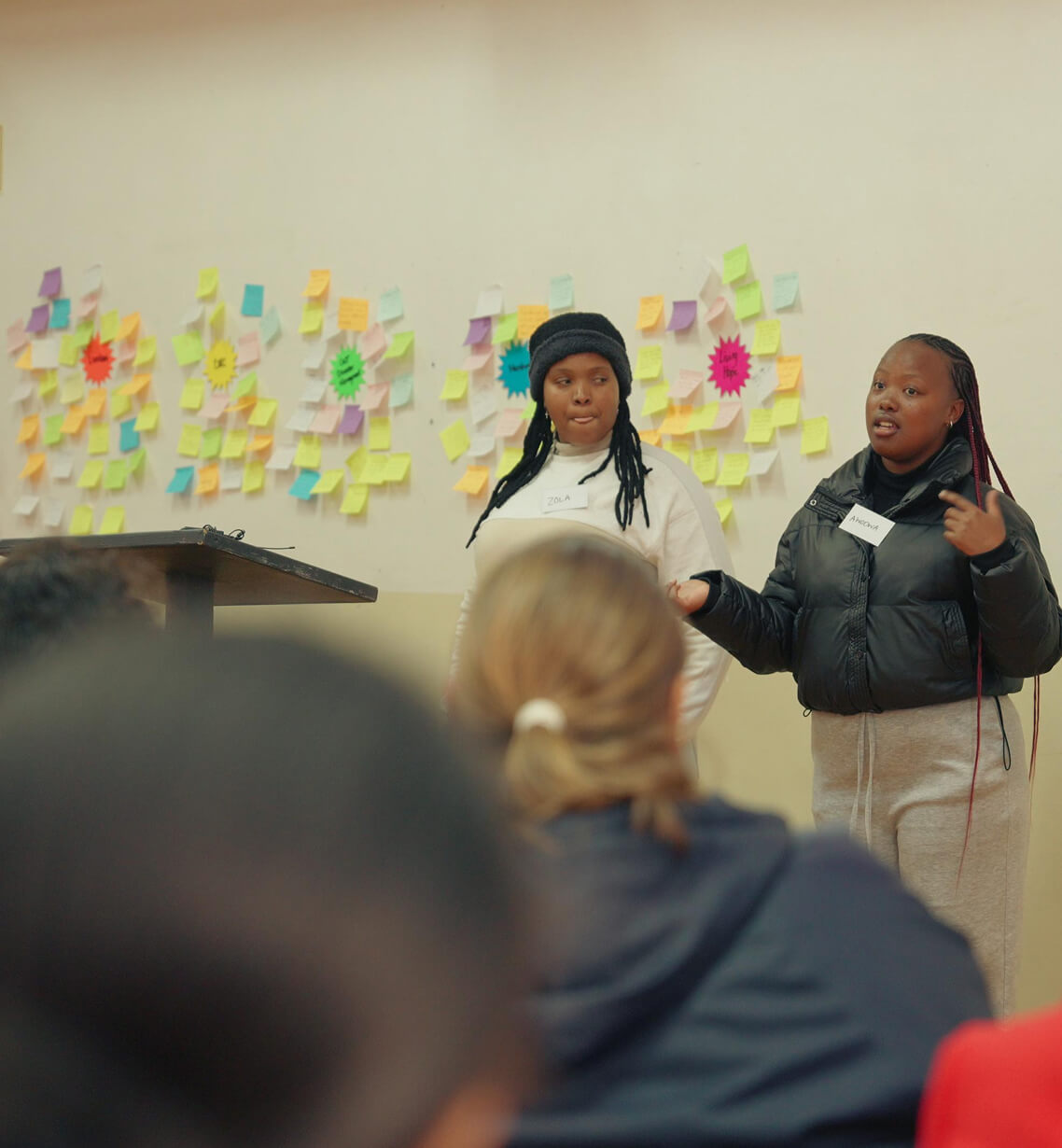
This growing sense of shared responsibility has already inspired Cape Town’s first Community of Practice on Informal Settlement Fire Safety, where residents, government departments, NGOs, academics, and private-sector actors work together to strengthen policy, coordination, and practice citywide.
From Local Action to Systemic Change
Insights from the FRA–FRR pilot helped catalyze Cape Town’s first Community of Practice on Informal Settlement Fire Safety, bringing together city and provincial government departments, NGOs, academics, private companies, and community representatives. The platform has created new space for collaboration and policy dialogue, allowing community-generated data to inform citywide fire safety strategies.
At the same time, this pilot offers a model for embedding fire safety into everyday systems of governance and community life. It shows that when residents lead assessments, define problems, and co-design solutions, the results are more relevant, lasting, and equitable.
Scaling What Works
Kindling is now building on these lessons to make community-led fire risk reduction scalable without losing the depth and trust that made it effective in Khayelitsha. The next step is development of a FRA–FRR Toolkit to translate these methods into practical guidance for communities, governments, and practitioners.
The toolkit will help others replicate the process of mapping risks, planning collaboratively, and building shared accountability between residents and institutions. As urban growth and climate-driven hazards increase, these insights are vital for creating safer, more equitable settlements locally and globally.
To continue this work, we’re seeking support to create the toolkit, pilot it in new communities, and make its resources openly accessible so more people can lead change where it matters most.
Sponsor
This program would not be possible without the generous support of our sponsor, UL Research Insititutes’ Fire Safety Research Institute.

Collaborator
We are grateful for our collaboration with the Development Action Group (DAG), whose partnership was instrumental in building relationships with community leaders, guiding the community selection process, and supporting leadership engagement and wider participation throughout the project.

- Nikelwa Maqula
Community Facilitator Coordinator