
Advocacy
Fire safety as an issue of justice.
Advocacy is about taking action to influence change — raising awareness of the nature of a problem, motivating for solutions, and securing rights and essential services. It is about navigating systems of power fearlessly and strategically, with people always at the center.
At Kindling, advocacy begins with the belief that fire is not only a technical or environmental issue, but a matter of justice, governance, and resilience. Fire risk is both a symptom and a signal of inequality, neglect, and exclusion. Through our advocacy, we bridge technical expertise with community knowledge to expose these overlooked risks and demonstrate that safer, more equitable systems are possible.
Why does advocacy matter?
Advocacy pushes for the people most affected by fire risk to be heard by those with positional or political power to bring about change. It bridges the gaps in knowledge, awareness, and will that often block progress, connecting communities, practitioners, policymakers, and politicians around a shared commitment to safety and dignity.
As our partner, the Development Action Group (DAG) noted following a dialogue with informal settlement residents:
“Generally, the relationship between informal settlement residents and the local municipality is plagued by either a lack of information or complete misinformation… The city develops policies about us, without us.”
This is what our advocacy seeks to change — transforming fire safety from a reactive response into a proactive, people-centered agenda for justice and inclusion.
How we advocate
Advocacy happens at every level of our work.
Within communities, we support residents to unpack the root causes of fire risk, not only the hazards themselves, but the systemic conditions that make them persistent. Through dialogue and participatory workshops, residents explore practical and political questions:
- How do we make people outside our community care and listen?
- How do we frame our requests so that they are specific, actionable, and grounded in evidence?
- What can we do ourselves, when we cannot force others to act?
These conversations build collective agency and prepare communities to engage decision-makers from a place of confidence and clarity.
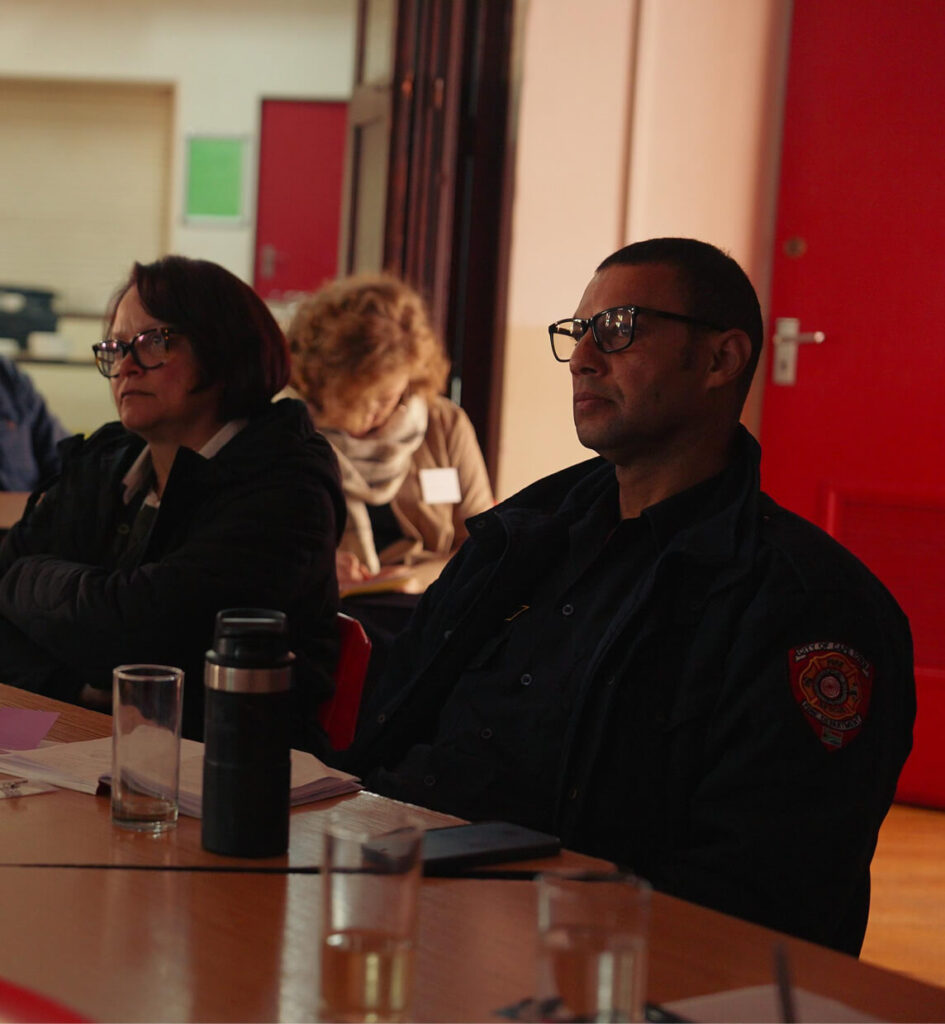
At the city and national levels, we link science and social practice, connecting engineers, firefighters, practitioners, policymakers, and residents to rethink the systems that produce fire risk. Through co-creation, open knowledge, and multi-sector dialogue, we shift power toward communities and position fire safety as integral to housing, infrastructure, and service delivery agendas.
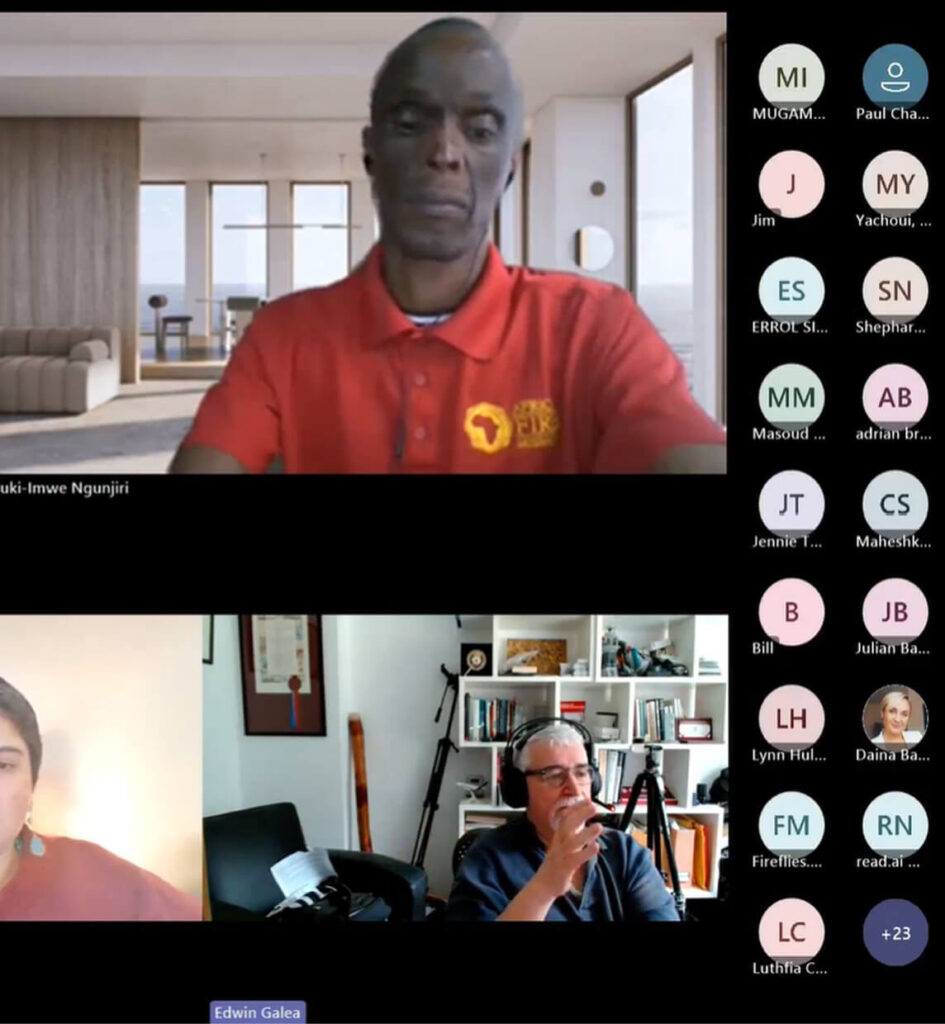
At the global level, we bring fire safety into broader discussions of protection, resilience and equity — publishing evidence, hosting dialogues, and shaping international agendas to push for fire risk to be recognized as a critical development and humanitarian issue.


The impact of advocacy
In our community dialogue sessions, residents describe a profound shift in how they see their communities, the fire problem, and their power to address it. For many, it was the first time they had been asked what they needed from local government or invited to help shape solutions themselves.
These conversations have already led to visible results: a community-led clean-up initiative, improved engagements with Fire Services during fire response, and greater awareness among municipal officials of the priorities residents are advocating for. Officials attending the City of Cape Town’s Community of Practice have noted that they are now forming relationships with organizations they had previously struggled to reach.
Residents, too, speak of a new sense of agency:
“We have a voice now.”
“This is the first organisation or project dealing with fire – many organisations have come about other issues – even government doesn’t look after victims of fire.”
“Kindling has given us a space to talk openly and express our feelings.”
What begins as dialogue becomes collective action. As trust grows, so does the possibility of sustained collaboration between communities and institutions, a foundation not only for safer neighborhoods, but for more just cities.